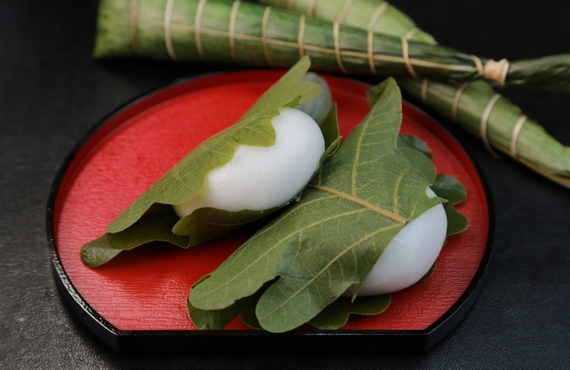
Kashiwa-mochi & Chimaki eaten on May 5th, Tango no Sekku ( Boy's Festival)
Hello. I’m Takae Sugama, the president of Manners Salon Cinderella Co., Ltd.
May 5th is Tango no Sekku, the Boys’ Festival in Japan.
In Japan, there are five seasonal festivals (sekku) held during the year, all on odd-numbered months: January, March, May, July, and September.
These customs are said to have been introduced from China.
・January 7th – Jinjitsu no Sekku (Festival of the Human Day)
・March 3rd – Jōshi no Sekku (Girls’ Festival or Peach Festival)
・May 5th – Tango no Sekku (Boys’ Festival)
・July 7th – Tanabata (Star Festival)
・September 9th – Chōyō no Sekku (Double Ninth Festival)
Each of these festivals marks a seasonal transition and is a day to pray for health, prosperity, and the well-being of future generations.
Each sekku is associated with special foods traditionally eaten on that day.
For Tango no Sekku on May 5th, the representative foods are kashiwa-mochi (oak leaf-wrapped rice cakes) and chimaki(sweet rice dumplings wrapped in bamboo or reed leaves).
The oak tree (kashiwa) is considered an auspicious tree in Japan.
While the leaves of most trees wither in autumn and fall in winter, oak leaves remain on the tree throughout the winter.
They only fall off once new buds begin to grow in the spring.
Because the old leaves do not fall until the new ones sprout, oak leaves came to symbolize “family continuity and prosperity of descendants.”
The glutinous rice used in chimaki is also seen as a symbol of good fortune.
For these reasons, both kashiwa-mochi and chimaki are traditionally eaten on Tango no Sekku, with the hope that boys will grow up healthy and achieve great success in life.

Access
マナーサロン・シンデレラ株式会社
| 住所 | 〒104-0061 東京都中央区銀座6-6-1 銀座風月堂ビル5F Google MAPで確認する |
|---|---|
| 電話番号 |
03-3935-9588 |
| FAX番号 | 03-3935-9588 |
| 営業時間 | 10:00~18:00 |
| 定休日 | 日 |
銀座駅と有楽町駅を最寄り駅として、お仕事帰りや休日にご利用いただきやすい駅チカサロンを運営しております。「マナーを身に付けて女子力を高めたい」「婚活を成功させたい」「ビジネスシーンにおける飲食で恥をかきたくない」など、様々なニーズの生徒様に通っていただいております。


Contact
お問い合わせ
ご入力の上、次へボタンをクリックしてください。